Predictive analytics is the use of historical and current data to predict what is likely to happen in the future. Statistical models and algorithms identify patterns in data and use them to estimate future developments. In this article you will learn what predictive analytics is, how it works, and how you can apply it within inventory management.
This blog in short
- Predictive analytics uses data to make predictions about future developments.
- Historical data and patterns form an important basis for these predictions.
- Within inventory management, predictive analytics can help estimate future product demand.
- Better predictions support decisions on stock and purchasing.
What does predictive analytics mean?
Predictive analytics literally means predictive analysis. Existing data is analysed to identify patterns and relationships that can be used to estimate future outcomes.
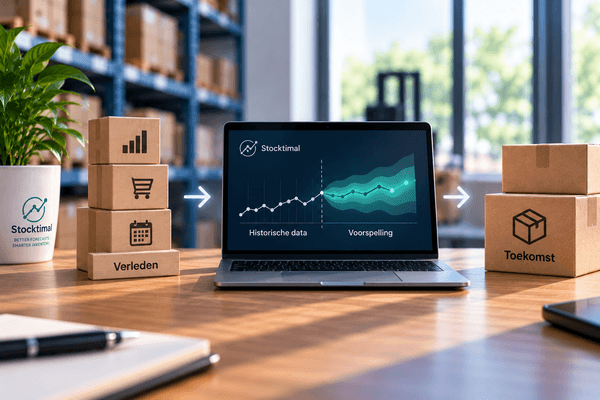
The key difference from analysis that only looks at the past lies in the goal. Predictive analytics uses information from the past to look ahead. The outcome is not a certainty, but a prediction of what is likely to happen.
How does predictive analytics work?
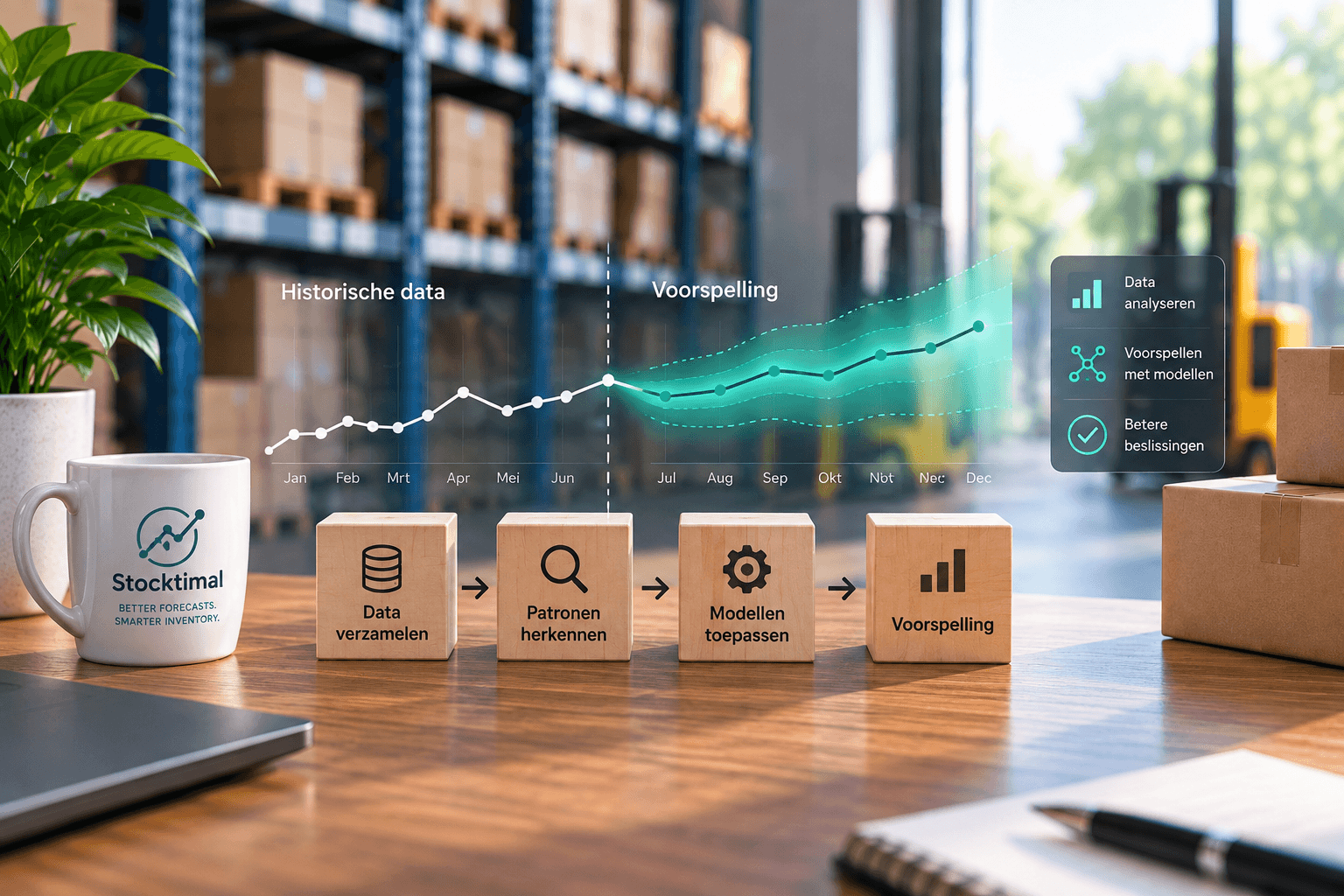
Predictive analytics starts with collecting relevant and reliable data. Patterns and relationships in this data are then analysed. Using statistical techniques and predictive models, these patterns can be translated into expectations for the future.
As new data becomes available, predictions can be recalculated. This matters because conditions and patterns can change over time. A prediction based on outdated data may no longer match the current situation.
What data do you need for predictive analytics?
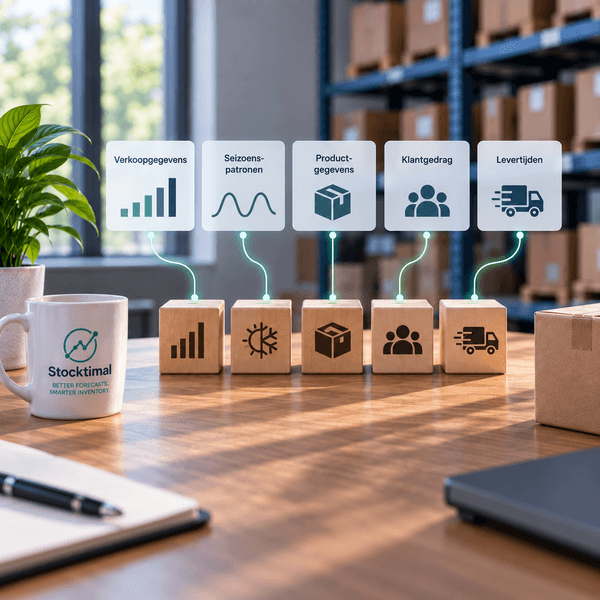
The data you need depends on what you want to predict. Within inventory management, historical sales data is an important source of information. It can reveal trends, seasonal patterns, and differences between products, among other things.
More data does not automatically mean a better prediction. The quality and relevance of the data matter just as much. Exceptional sales spikes or missing data, for example, can distort the picture if they are fed into a predictive model without further review.
What is predictive analytics used for?
Predictive analytics is used across various sectors to predict future developments, such as customer behaviour, risk, or future demand. For Stocktimal, that last application is the most relevant: predicting future product demand.
By analysing sales patterns per SKU, you can estimate how much demand to expect in an upcoming period. That prediction can then inform decisions on purchasing and stock, for example. In this way, data is used not just to explain what has happened, but to be better prepared for what is likely to happen next.
Is predictive analytics always reliable?
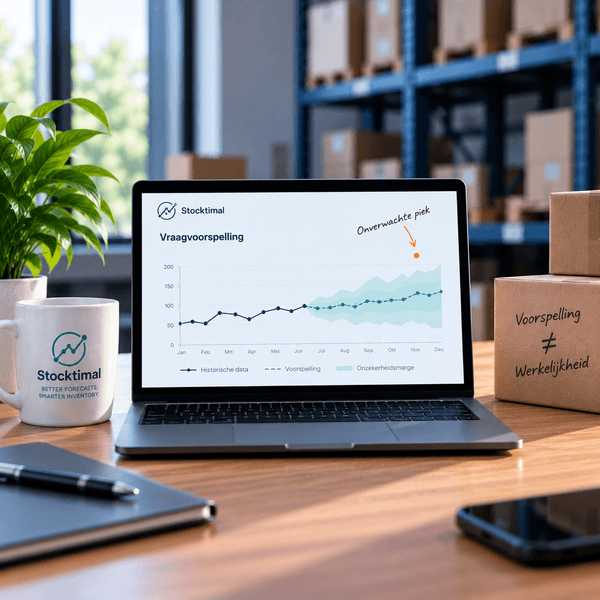
No. Predictive analytics cannot predict future developments with certainty. A model bases its expectation on available data and patterns, while unexpected events can cause reality to deviate from it.
Predictability can also vary significantly by product. A SKU with a stable, recurring sales pattern is generally easier to predict than a product with large, irregular fluctuations. It is therefore important to consider the uncertainty around a prediction alongside the predicted value itself.
How does predictive analytics help with inventory management?
Within inventory management, predictive analytics helps you factor future demand into stock decisions. This lets you plan further ahead, instead of only acting once stock is nearly depleted. Predictive analytics can also play an important role in demand planning, where future product demand is predicted to plan stock and purchasing more effectively.
A demand prediction is only one part of the picture. A sound stock decision also depends on current stock levels, open orders, lead times, safety stock, and the desired level of product availability. Predictive analytics delivers valuable input, but it still needs to be translated into concrete stock decisions.
Predictive analytics with Stocktimal
At Stocktimal, we use data to help companies with demand forecasting and inventory optimisation. For each SKU, we can apply a forecasting model that fits that product's demand pattern.
These forecasts are then combined with relevant stock information to support better stock decisions. This is how we help companies at Stocktimal plan ahead, reduce stock shortages, and avoid unnecessary stock at the same time. Want to know how Stocktimal can put data and demand forecasts to work for your inventory management? Request a free trial run or get in touch with us for more information.