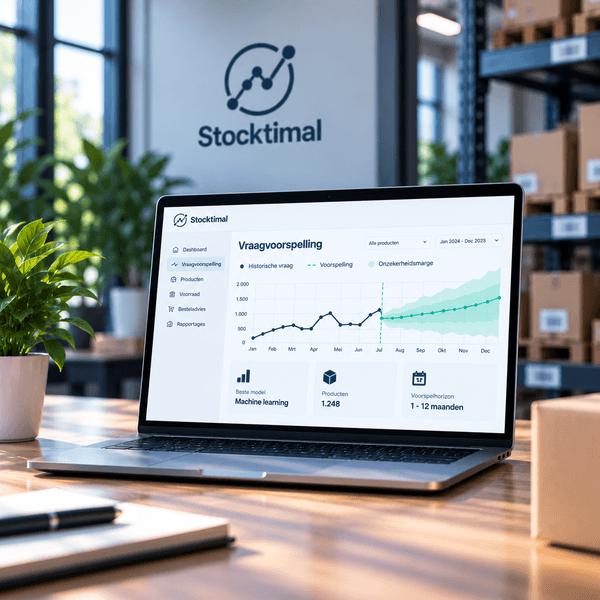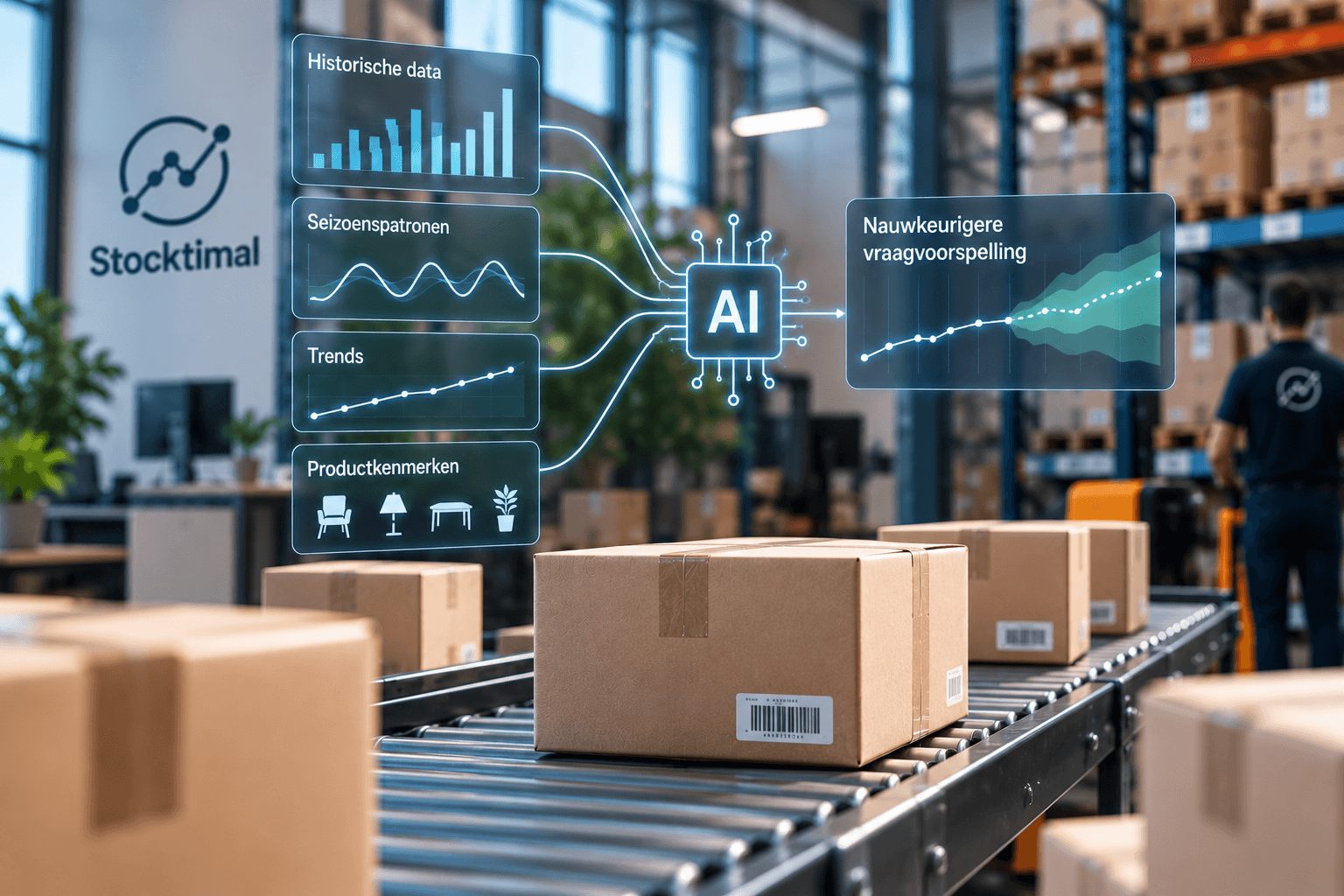
AI improves demand forecasts by analysing large volumes of historical data and recognising patterns that help estimate future product demand more accurately. Machine learning and other forecasting models can account for differences between products and shifting demand patterns. This post explains how AI is used in demand forecasting and why good data matters as much as the model you choose.
This blog in short
- AI can recognise patterns in sales data and use them to forecast future demand.
- Not every product is best forecast with the same model.
- Good, reliable data is essential to the quality of a forecast.
- AI supports stock decisions, but it doesn't replace knowledge of the assortment and the processes behind it.
How is AI used for demand forecasting?
In demand forecasting, AI can analyse historical sales data to find patterns that say something about future demand — structural trends, seasonal patterns, recurring sales peaks and shifts in demand. Machine learning models can systematically recognise these patterns and factor them into a forecast.
As new sales data comes in, forecasts can be recalculated. That lets AI forecasting keep pace with changes in the demand pattern, producing an up-to-date picture of expected product demand.
Why can AI improve demand forecasts?
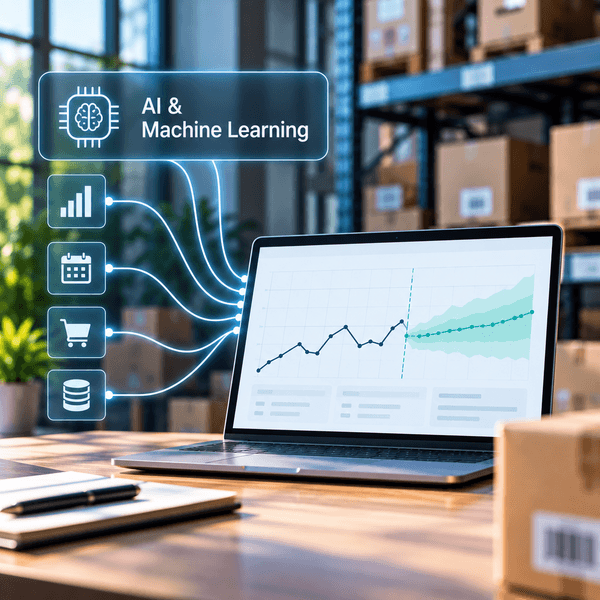
AI can improve demand forecasts because models can systematically analyse large volumes of data and recognise complex patterns. That's especially valuable when an assortment spans hundreds or thousands of SKUs that don't all behave the same way in sales.
A product with stable demand, for example, calls for a different approach than a SKU with strong seasonal effects or irregular sales peaks. Accounting for these differences lets the forecast track the actual demand pattern of a product more closely.
Is AI always better than traditional forecasting models?
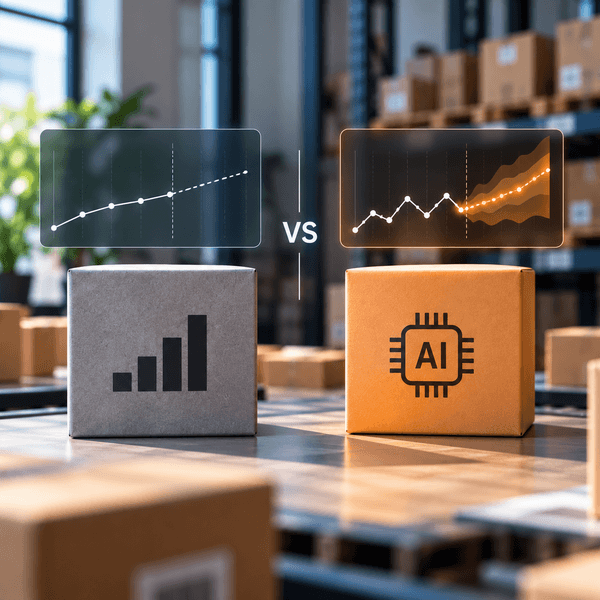
No. An AI model isn't automatically more accurate than a traditional statistical model. Which model forecasts best depends on factors such as the available data volume, the demand pattern and the forecast horizon.
That's why it's wise to compare several models rather than picking a single method for the whole assortment up front. For a stable SKU, a statistical model may perform excellently, while for another product a machine-learning or neural model delivers better results.
Good data remains the foundation
The quality of a forecasting model is strongly shaped by the data it's applied to. Missing data, unusual sales peaks or an illogical breakdown of product groups can all affect the outcome of a forecast.
That's why good demand forecasting doesn't start with picking the most advanced AI model — it starts with understanding the available data. Which patterns are genuinely structural? Which anomalies need attention? And does the available information match the way the assortment is actually planned in practice?
Can every product be forecast with the same AI model?
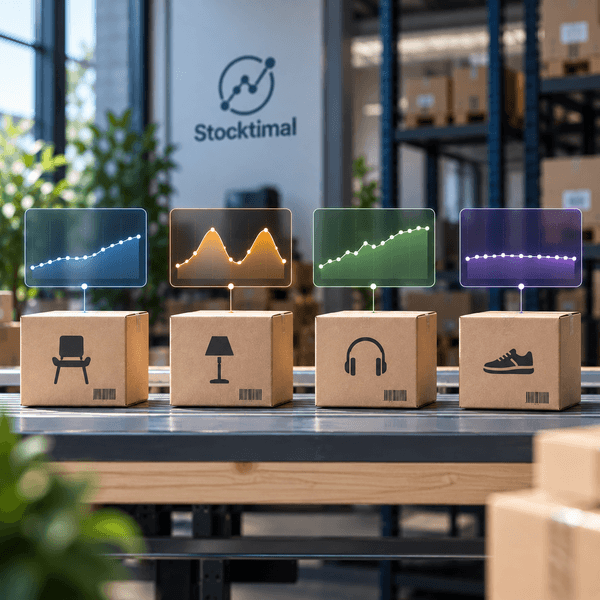
No. Different SKUs can have very different demand patterns. A single model for the whole assortment won't necessarily produce the best forecast for every product.
The period you're forecasting for can also make a difference. A model that performs well for a short-term forecast won't automatically be the best choice for a longer forecast horizon. Evaluating models per SKU or per forecast horizon lets the chosen approach track the actual behaviour of demand more closely.
Why does human knowledge stay important in AI forecasting?
Human knowledge stays important because AI doesn't automatically know every circumstance within a business. An organisation knows, for instance, which changes are coming to the assortment, which agreements are in place with suppliers, and which exceptions matter within the operation.
That's why data and practical knowledge work best together. AI can support the recurring analysis work and surface anomalies, while staff use their knowledge to assess the results and make the final decisions.
AI demand forecasting with Stocktimal
At Stocktimal, we use a range of forecasting methods to estimate future demand as accurately as possible. Our engine compares statistical, machine-learning, neural and foundation models and determines which approach works best. That choice can be made for the whole assortment, or per SKU or forecast horizon.
The forecast demand is then combined with relevant stock information to support stock decisions. That's how we help companies at Stocktimal not just look ahead, but translate forecasts into what to order and when. Want to see what Stocktimal forecasts for your own assortment? Request a free trial run or get in touch with us for more information.